
Manifesto 2014

Trans* Jersey’s manifesto defines the problems faced by transgender, transsexual, genderqueer, androgynous, bigender and intersex Jersey residents in 2014 and explains what actions we intend to take to address these issues.

DoctorTrans* Jersey believes that the island’s trans population is being patchily served by GPs and the States of Jersey Health and Social Services (“H&SS”) Department. This is due to the lack of clear guidelines for healthcare professionals working with trans patients. Individual clinicians within the H&SS Department are not seen to be at fault and, once the H&SS Department has been accessed, experiences of care have been good to excellent, largely through the efforts of the clinician acting on their own initiative. However, the initial route into healthcare for trans patients is unclear. The evidence suggests that the quality of healthcare provided is also influenced by the tenacity and perseverance of the trans individual being treated.
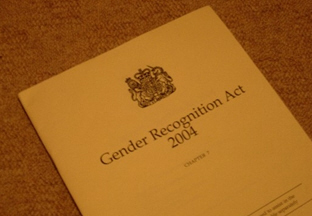
GenderRecActTrans* Jersey supports the calls by trans* organisations in the UK that the process for procuring a gender recognition certificate (“GRC”) needs revision. The Gender Recognition (Jersey) Law 2010 allows for a GRC from a recognised jurisdiction to be passed in the Royal Court. Any revisions that happen to the UK Gender Recognition Act 2004 as a result of the consultation happening with trans* organisations will, therefore, directly affect trans islanders. At present, Jersey has no mechanism by which to issue a GRC. However, this may change if trans* organisations within the UK are successful in calling for the Gender Recognition Act to be scrapped and for the issuance of a GRC to be an administrative process driven by the trans individual.

lawTrans* Jersey is committed to ensuring that all States of Jersey legislation that directly affects trans* islanders is scrutinised and responded to on behalf of the Jersey trans* community in order to safeguard our human rights. Trans* Jersey is currently preparing a response to both the States of Jersey consultation on sex discrimination and the imminent debate on equal marriage. Trans* Jersey will also be reviewing all legislation in force to ensure that there are no revisions that need to be called for.

equal marriageTrans* Jersey believes that equal marriage legislation is essential to ensure that trans islanders are not discriminated against, and that any equal marriage law introduced in Jersey should not contain the so-called Spousal Veto. Trans islanders who are married or in a civil partnership at the time of their transition have no option currently but to get divorced before they can acquire a full GRC. On the granting of a full GRC, the couple may formalise their partnership again by having another wedding ceremony. This situation is patently in violation of all human rights.

TeacherTrans* Jersey believes that education is the key to many of the issues faced by trans* individuals in society and is therefore committed to providing opportunities and resources to cisgender islanders in order that they can learn more about the trans* population. In the coming months, Trans* Jersey will be seeking conversations with private schools and the States of Jersey Education, Sport and Culture (“ES&C”) Department about including trans* issues within the sex education curriculum.

These are not the only issues faced by trans* individuals in Jersey, but they are the most important ones to be addressed. We are a small group with no financial backing. This manifesto is, therefore, necessarily realistic in its aims. It is not possible to hit all targets at once so we are being selective. Once progress has been made on these issues, we can turn our attention to other areas where reform is needed.

You can download the complete manifesto as a pdf here.

Summary of UK trans* issues

The following is taken from a paper produced in May 2014 by the UK charity, GIRES. It is a useful summary of the issues facing trans* citizens and the groups working with them for equality.

Introduction

The numbers of transgender people presenting for medical treatment is increasing by 20% pa. This figure rises to 50% for young people. EHRC estimates that 1% of the population fall under the protected characteristic of gender reassignment.

Transgender people are the victims of unequal treatment under the law. This sets a dreadful example and fuels the discriminatory and sometimes violent and abusive treatment experienced by many trans people.

The current government has chosen to ignore a growing cohort of younger people who do not identify with the gender binary. Many such people have no protection under the 2010 Equality Act and have no mechanism to get appropriate ID. In effect they are being excluded from Society.

Surely in 2015 equality and enjoyment of full Human Rights shouldbe an entitlement of all?

GIRESLogo
A course of action is requested to achieve the following end state:

(a) having no legislation permitting discrimination on the grounds of gender identity or non gender binary identification;

(b) truly equal marriage;

(c) abolition of the 2004 Gender Recognition Act and new processes for gaining appropriate ID;

(d) education for younger people to eliminate prejudice in the longer term; and

(e) new medical treatment models to cope with the rapidly increasing numbers presenting for treatment.

Government must come to realise that people cannot be categorised into neat boxes and its obsession in trying to do so is making life very difficult for many!

A summary of requested actions is given below. [More detail on each section can be found in separate posts]:

1. Legislative revisions [More detail on this can be found here]

Equality Act 2010: Remove any rights to legally discriminate against transgender people. Grant protections to those who do not fit into the gender binary.

Gender Recognition Act 2004: Trans people find the process of having their assertions of gender incongruence checked for truth by the Gender Recognition Panel a degrading and patronising (and also expensive and protracted) process. The Act was introduced to address the lack of same sex marriage in the UK and is no longer relevant, and indeed divisive. Given that gender related discrimination is no longer permitted in the UK, a legal change of gender on birth certificates should be a self driven administrative process.

Marriage (Same Sex Couples) Act 2013: The Spousal Veto must be removed if this remains in the Act when the trans marriage regulations are passed later in 2014. The marriages of couples who were forced to annul and subsequently formed civil partnerships should be reinstated. Government assertions “that the past cannot be rewritten” are hollow given that birth certificates, and soon marriage certificates, can now be altered.

Matrimonial Causes Act 1973: Section 12(h) (non disclosure of gender history) must be withdrawn. Under this provision trans people are singled out for treatment not applied to any other group. Furthermore, as one does not have to disclose (for example) that one is a convicted murderer or married to another) before having sex, why can one be imprisoned for not doing so if one has a trans history?

Application of EU law to pension claimants: Despite very clear and well established superior European Court of Justice case law, the Department of Work and Pensions, supported by some but not all Courts, continues to act unlawfully towards some transgender pension claimants.

2. Non gender binary issues [More detail on this can be found here]

Marriage laws: Gendered language in ceremonies should be optional.

Passports: The introduction of the X marker on passports is long overdue. The conclusion of a recent Passport Office report on this topic was that there is no demand for X markers contradicted the evidence it received.

Birth Certificates: As part of the new provisions following the Gender Recognition Act a mechanism should be introduced to allow the sex classification to be removed or changed or an “X” category added.GIRES encourages direct communication with the appropriate communities.

3. Education [More detail on this can be found here]

It is the experience of GIRES that many in government do not understand the difference between sexual orientation and gender identity. This is vividly demonstrated by married trans people and their spouses “being shoehorned into arrangements for gay and lesbian people” (evidence: Commons Committee Stage, Same Sex Marriage Bill). However, the route to combating transphobia longer term is to introduce awareness training on diversity, early in the education process, in schools.

4. Medical treatment of trans people [More detail on this can be found here]

Despite some recent progress in improved treatment protocols, the growing numbers presenting for medical help are now overwhelming the specialist clinics. Although gender dysphoria is no longer accepted as a psychiatric condition, treatment generally remains under the control of specialist clinics led by psychiatrists. Inappropriate treatment and increasing delays are harming transgender people. New treatment models must be implemented to ensure timely and flexible treatment packages that make best use of the funds available.

Gay Pride 13.jpg

Trans* Jersey’s response to the proposals in GIRES’ report

Because so much of Jersey’s transgender and transsexual population’s experience is as a result of having treatment in the UK or acquiring their gender recognition certificate from the UK, these issues affect us, too. Trans* Jersey, therefore, wholly supports the aims and proposals of GIRES and the other trans* organisations working to reform the law in the UK.

To find out more about how Jersey trans* individuals are affected by each of the four proposals listed above, click on the links to more detail where we outline the proposed change in greater depth and explain how we would like to see the States of Jersey tackle these issues.

Equal marriage support

Trans* Jersey supports Deputy Sam Mezec’s call for the States of Jersey to pass legislation to legalise same-sex marriage. Trans* Jersey goes further and would support a move for the island to model its law on Scotland’s equal marriage legislation.

We support equal marriage because, as the law currently stands in Jersey, a transman or transwoman in a marriage or civil partnership and wishing to legally transition (by acquiring a gender recognition certificate (“GRC”)) must first obtain a divorce from their spouse. Divorce and re-marriage (via a civil partnership or marriage, depending on which way you are going!) carries with it not just costs but implications for the continuation of legal documents, such as wills, and pension provisions.

This is the only known example where the law requires someone to forgo one right (the right to remain married to their partner) in order to access another (the right to private life afforded by the Gender Recognition Act). This anomaly has led to some transsexual people in the UK deciding not to acquire a GRC, as they argue their marriage vows were for life and they object to the idea that their partner (by remaining with them and true to those vows) would be unfairly treated by dissolving the original bond.

When Scotland was considering equal marriage legislation, James Morton of the Equality Network and Scottish Transgender Alliance released this video explaining why equal marriage matters to trans and intersex people. Trans* Jersey agrees with the points he made.

When England introduced the Marriage (Same Sex Couples) Act 2013, they got it wrong. They included what has come to be called the Spousal Veto, a clause that allows spouses of transgender people to effectively stop them from legally transitioning (i.e. acquiring a GRC). Sarah Brown, the LibDem politician and trans* activist, explains why this is a problem here.

When Scotland passed its legislation, the Marriage and Civil Partnership (Scotland) Act 2014, they got it right. They removed the need for transgender people to dissolve their marriage before be able to acquire a GRC; they have enabled people to have gender-neutral marriage ceremonies; and they secured the removal of the spousal veto.

An explanation from the Equality Network on what Scotland’s recently passed equal marriage bill will mean for trans and intersex people.

The Equality Network is a Scottish lesbian, gay, bisexual and transgender (LGBT) equality charity: http://www.equality-network.org

Jersey trans* law

Currently, there is only one piece of legislation in Jersey that is directly concerned with protecting transgender islanders: Gender Recognition (Jersey) Law 2010

This law deals with the process of issuing a gender recognition certificate (“GRC”), the legal effect of a GRC on existing marriages and civil partnerships, the general consequences of issuing a GRC, the prohibition on disclosure of information relating to a holder of a GRC, the requirement (or not) to alter public registers and clarification of those agencies exempt from the prohibition on the disclosure of information.

Jersey recognises that it does not have the required healthcare professionals who can make decisions based on appropriate evidence to grant an inidividual a GRC. The island, therefore, looks to bigger jurisdictions to undertake this process for its trans* citizens. Having obtained a GRC from a jurisdiction approved by Jersey, a GRC will then be granted by the Royal Court. Most islanders will, therefore, apply to the UK for a GRC, which can then be presented in Jersey’s Royal Court.

The UK’s Gender Recogntion Act 2004 covers the issuance of GRCs. The granting of a GRC is decided by The Gender Recognition Panel, a branch of HM Courts & Tribunal Service. It is formed from an administrative team and a judicial panel, made up of legal and medical members. The panel needs to be satisfied that the applicant has lived in their correct gender throughout the period of 2 years prior to the date of the application and intends to continue doing so until death. It is a matter for the panel to decide whether the medical evidence satisfies that test. The charity GIRES provides guidelines for applying for a GRC here.

law
It is to be noted that the LGBT Consortium in the UK have recently published a consultation paper stating that the Gender Recognition Act is no longer fit for purpose and requires reviewing.

Advantages of obtaining a GRC:

  • All legal documents, including your birth certificate, can be changed to your correct gender. Note: the States of Jersey will issue driving licences and passports in your correct gender without the requirement of a GRC.
  • A GRC prohibits those privileged with the information that a person is trans* from disclosing it to others. There are, however, quite a number of exceptions to this prohibition.

Disadvantages of obtaining a GRC:

  • If you are married or in a civil partnership, you will need to dissolve or annul the union before a full GRC can be obtained from the Royal Court. Note: this is not a requirement for marriages in the UK since the passing of the Marriage (Same Sex Couples) Act 2013.

New sex discrimination law

The States of Jersey launched a consultation on the next phase of discrimination legislation due to become law in September 2015. It includes gender reassignment discrimination.

This will be the second piece of legislation to directly concern trans* islanders. We therefore want hear your views in order to formulate a response to the consultation.

Please our consultation page to find out more about how you can get involved before 30 May 2014.