Discrimination Law update

susiepinelTrans* Jersey and Liberate met with Susie Pinel, Social Security Minister, on 23 January 2015 to discuss the progress of the next phase of Jersey’s discrimination law that, amongst other things, deals with discrimination of transgender people.

The good news is that, although more work needs to be done on the parts of the new law that deal with pregnancy mainly, the policy team are confident that it will be in force by September 2015. It is hoped that a draft document might be publicly available soon.

From the partial draft available at the meeting, the parts of the law dealing with sexual orientation are well-written and provide protection for sexual minorities.

Those parts of the law dealing with gender reassignment still need a bit of work to get the wording right, but the basic principles are in place. Trans* islanders will be protected no matter what stage of their transition they are at. This includes those who identity as trans* but have not yet started any form of treatment. Intersex islanders will also be protected. Both these inclusions are improvements on the UK’s legislation.

It was obvious from the meeting that the policy team are working hard to make Jersey’s law as good as it can be and have learned from mistakes made in the UK’s Equality Law. This is all positive news for trans* islanders.

Media links: Equal marriage by 2017

Jersey Evening Post: Monday 1 December 2014

BBC Radio Jersey: Sunday 30 November 2014 (timecode: 01:04)

Pink News: Friday 28 November 2014

Jersey Evening Post: Wednesday 26 November 2014

Jersey Evening Post: Thursday 27 November 2014

Channel Television: Wednesday 26 November 2014

BBC Radio Jersey: Wednesday 26 November 2014 (timecode: 01:07)

BBC News: Wednesday 26 November 2014

Bailiwick Express: Thursday 27 November 2014


Results of equal marriage consultation

gaymarriage2

Trans* Jersey and Liberate met with Chief Minister Ian Gorst on 21 November 2014 to discuss the findings of the consultation into the question of whether it is appropriate to introduce legislation to equalise marriage in Jersey.

Consultation results

The online survey conducted by the Chief Minister’s office had 1,094 respondents and 161 people wrote letters on the subject. This represents an amazing level of response and bears witness to strongly held opinions on both sides of the debate.

However, this only represents 1.5% of the population and, inevitably, only those members of the population who feel strongly about the subject. It was no surprise, therefore, to learn that 54% of respondents were for and 46% were against equal marriage. The closeness of the result is probably not representative of the population as a whole but speaks to the fact that about 10% of the population are LGBTQ and about 10% of the population are regular churchgoers, both parties being well mobilised and well versed in the arguments for and against.

Of the three options offered for making equal marriage a reality, the responses were as follows –

  • Civil marriage only – 34% for
  • Civil and religious marriage (with an opt-out for those whose faith does not allow for same-sex unions) – 55% for
  • Union Civile – 75% against

On the question of allowing humanist marriages to take place, 50% agreed that they should, but the lack of comments on this issue was interpreted to mean either a lack of understanding of the issue or a lack of real interest in seeing it happen.

On the question of opening up civil partnerships to opposite-sex couples, 75% were in favour. However, the comments from respondents indicated that this option was less about equality and more about greater legal protection for co-habiting couples.

On the question of parity of law for same-sex and opposite-sex couples where adultery is concerned, 65% were for equalising the law.

Of the options offered for equalising the law on adultery, the responses were as follows –

  • Removing adultery from law – 11%
  • Creating a new definition of adultery – 40%

This result spoke to concerns that fidelity is important within any marriage and that to remove adultery from law is to make fidelity appear less important.

In addition, a number of points came out of the consultation –

  • Marriage matters to everyone (whether you are for or against same-sex marriage).
  • Equality and non-discrimination is an important issue that respondents respected and did not want to stand accused of breaching.
  • From those people of faith, the message was that marriage can only be between a man and a woman.
  • There were also a number of people who felt that civil partnerships should be enough for same-sex couples.
  • Both sides agreed that civil partnerships are not the same as marriages.
  • For some “redefining” marriage to include same-sex marriages is not an option.
  • There were concerns surrounding the use of language if same-sex marriage were to happen, such as the neutralising genders on official documents. People from both sides were unhappy with words such as spouse1/spouse2 and would prefer husband/wife, wife/wife, husband/husband.
  • Both sides of the argument represent a minority of the population. This is, therefore, a minority issue.
  • The impact of same-sex marriage on children worried some respondents. However, research from other jurisdictions shows that there is no negative impact. This did raise the issue of changes to educational and family policy that will need to be looked at by the States. (For example, the automatic right of a mother to have responsibility for her children. At the moment, there is no automatic right for fathers.)
  • Some were concerned that same-sex marriage would promote homosexuality.
  • The cost of implementing the legislation is not inconsiderable and, it was felt, needed to be weighed against the number of beneficiaries. At the last census, 0.4% of the population are living together in a same-sex relationship. (Note: this is not the same as the percentage of the population that is LGBTQ.)
  • The estimate of the number of equal marriages that will be held following the introduction of a new law is 44. This is similar to the uptake of civil partnerships following their introduction.

The proposal

Based on his findings, the Chief Minister will be bringing forward the following proposal for legislation –

  • Civil and religious marriage for same-sex couples with an opt-in clause for religious groups and their clergy. This will preserve terms such as husband and wife. It will also include something similar to the “quadruple lock” that protects religious organisations from prosecution under anti-discrimination legislation and is included in the England and Wales legislation for same-sex marriage.
  • Civil partnerships will be able to seamlessly convert to marriages. This can happen with or without a marriage ceremony as the couple chooses. Marriages will not be allowed to convert to civil partnerships, however, as this has proved unhelpful in other jurisdictions where it has been used to facilitate divorces.
  • Humanist marriage will not be brought in.
  • There will be no so-called “spousal veto” where, in England and Wales, a person in a marriage transitions and their spouse can prevent them from applying for a gender recognition certificate (in order to stop the marriage becoming a same-sex marriage). Jersey will seek to follow Scottish law on this point.
  • Civil partnerships will not be extended to opposite-sex couples and will be gradually phased out, if possible, because they are seen by the majority of people as a “second-tier” of marriage. More work will be done to find ways to provide more rights to co-habiting couples. If civil partnerships cannot be phased out, the decision will be revisited and the Chief Minister will seek to bring in civil partnerships for opposite-sex couples.
  • On the question of equalising adultery in the law, the Chief Minister will not be seeking to remove it from law as it is clear that sexual fidelity in marriage matters to people. He will be exploring the option of “no fault” divorces, the ability of a couple to apply jointly for a divorce (rather than one party bringing an action against the other) and the legal requirement for a divorcing couple to have mediation first. All options are being investigated with the intent of taking some of the acrimony out of divorce.

Timetable

The Chief Minister will report his findings to the States Chamber on 26 November 2014. The proposition will be brought in the first quarter of 2015 with a request for the States to approve the time frame and the process of legal change. Because there are extensive amendments that need to be made to other laws, a clear order of progress is required. (For example, within taxation law, a couple in a civil partnership can elect which partner is treated as the main taxpayer but, for a married couple, it is always the husband who is automatically the main taxpayer. This is clearly inequitable and needs amending.)

It is anticipated that Jersey will have same-sex marriage by the end of 2017.

You can download the full report on the consultation here.

Press release: 26 November 2014

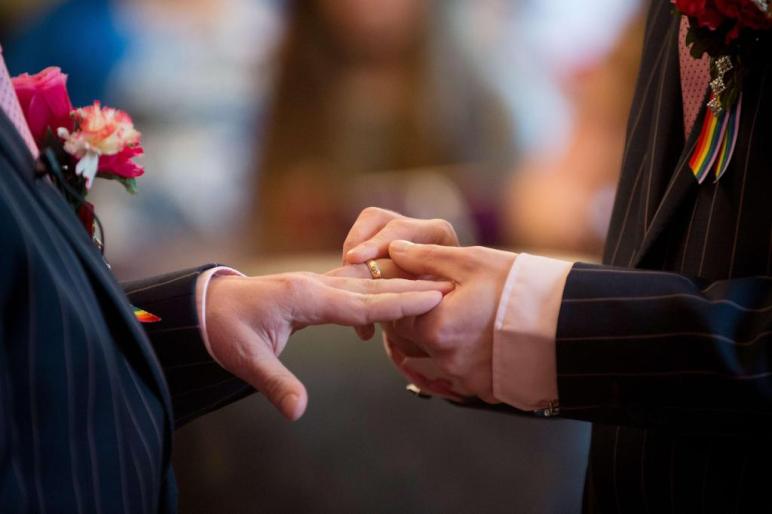
Trans* Jersey welcomes the Chief Minister’s report on equal marriage, especially its handling of the particular trans issue of the spousal veto.

Trans* Jersey met with Chief Minister, Ian Gorst, to discuss the findings of the consultation into the question of whether it is appropriate to introduce legislation to equalise marriage in Jersey. The resulting report is a significant document that has been compiled with consideration of both sides of the argument for and against equal marriage and, as such, is welcomed by Trans* Jersey.

Trans* Jersey’s founder, Vic Tanner Davy, said: “We are impressed by the work done by the Chief Minister and his department in addressing all aspects of the issue thoroughly and with great understanding.”

trans couple 2The report also addresses the issue of the so-called “spousal veto” that exists within the same-sex marriage law of England and Wales, but not the equivalent Scottish law.

Vic Tanner Davy again: “The spousal veto is a nasty piece of legislation that demands a trans person in a marriage asks permission of their spouse before applying for their gender recognition certificate, which makes them for all legal purposes their affirmed gender. This inclusion in the England and Wales law spoke to the concerns of some MPs that the non-trans party to an opposite-sex marriage would be forced into a same-sex marriage because of their spouse’s legal transition.

“In reality, a person’s transition does not happen overnight. It takes at least two years of living as your affirmed gender before you can apply for a gender recognition certificate in the UK. During those two years, a trans person will have undergone gender therapy, most likely started hormone therapy and may have had gender reassignment surgery. If their spouse is still with them at the point that the trans partner applies for their gender recognition certificate, they will already be aware that they are living in a marriage that, to the outsider, has changed.

“Transitioning is difficult and stressful at times as every trans person endeavours to maintain partnerships and family relationships intact throughout the process. The last thing they need is added pressure from the state intervening in what is a private matter between the two people who are party to the union. We are, therefore, delighted that the Chief Minister has taken this into consideration and will be proposing the Scottish model for dealing with the issue. This will enable marriages to change seamlessly between same-sex and opposite-sex with no requirement for divorce and re-marriage or for spousal permission when one party to a marriage transitions.”

Press release: 6 November 2014

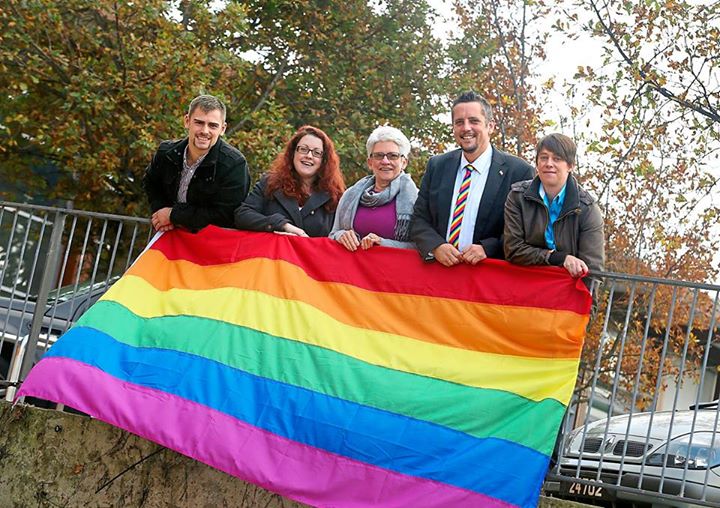
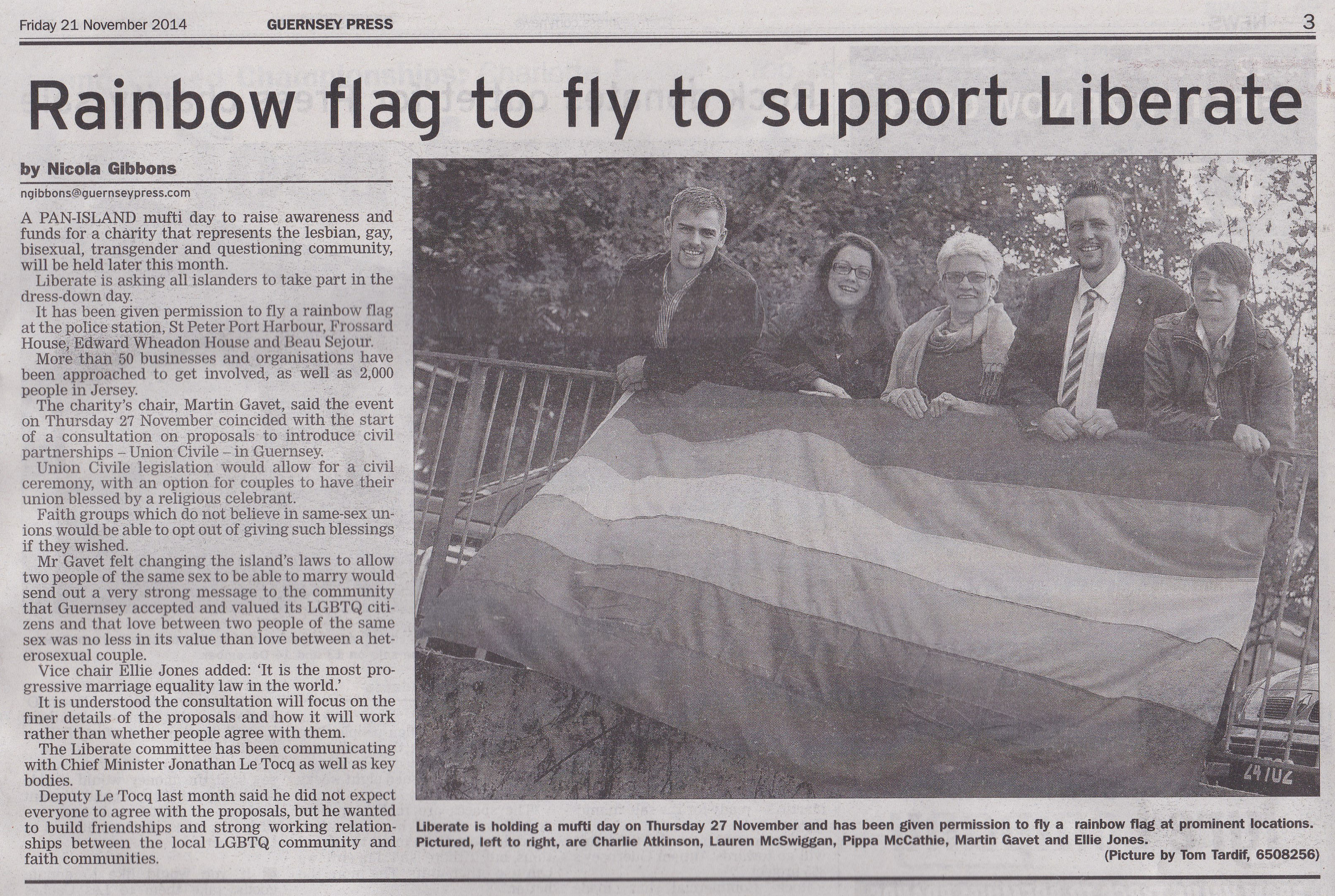
On  27 November 2014, the Channel Island charity Liberate (supported by Trans* Jersey) is holding its first Rainbow Mufti Day and they are encouraging businesses, government offices, schools, places of worship, clubs and associations in the islands to get involved. Liberate are asking all Channel Island workplaces to fly a rainbow flag or allow their employees, members or pupils to dress in brightly coloured clothes to show the world that the islands support equality.

This year, Jersey has introduced the first of its anti-discrimination laws that protects all islanders’ from discrimination on the basis of race. Next year, the law will be extended to offer protection on the grounds of gender, sexual orientation and gender reassignment. Following that, protection for age and disability will be introduced. Liberate’s call for Jersey and Guernsey to show their support for their employees, members and pupils no matter what their race, gender, sexual orientation, gender identity, belief, age or disability is, therefore, timely.

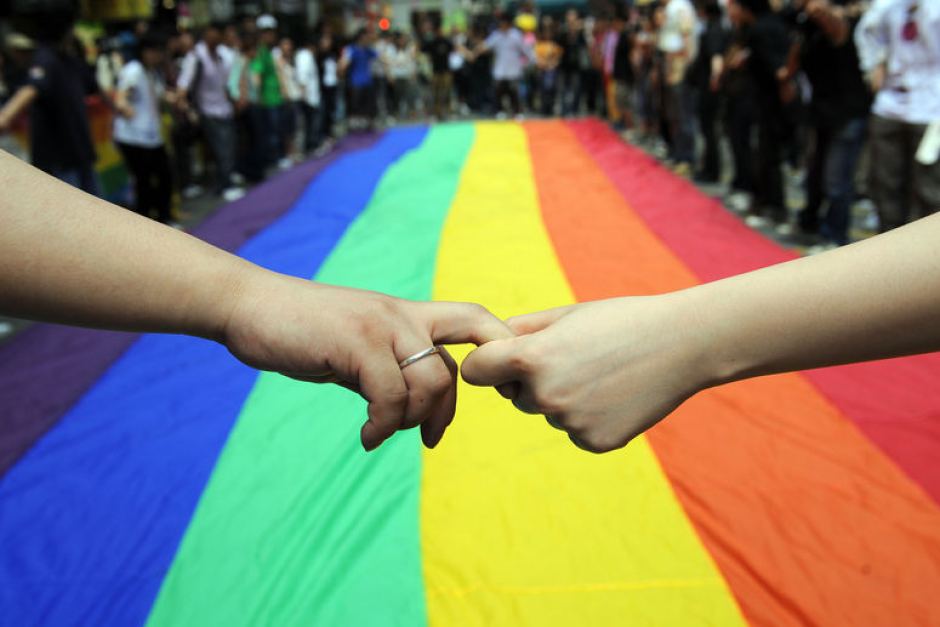
It is also no coincidence that the day marks the anniversary of, San Francisco city supervisor, Harvey Milk‘s assassination in 1978. Milk was an early campaigner for equal rights for the gay community of the city and the first openly gay US citizen to be elected to public office. Thankfully, we live in a more enlightened age now and there are many LGBTQ people in public life. However, inequalities for minorities within society still exist and Liberate is prompting Channel Islanders consider some of these on 27 November 2014 and to then take steps to make changes that make their workplace more inclusive.1706530-3x2-940x627Although the rainbow flag is strongly associated with the LGBTQ community, its symbolic meaning is one of inclusion and equality for all. It was designed by San Franciscan, Gilbert Baker in 1978 and has undergone several revisions since. The modern flag has six predominant stripes, each colour carrying a different meaning: Red – Life.  Orange – Healing.  Yellow – Sunlight.  Green – Nature.  Blue – Serenity or harmony. Violet – Spirituality.

Liberate are hoping to make Rainbow Mufti Day an annual event so, if you don’t have a rainbow flag, why not get one this year that can be used again, and again! Flags can be obtained by emailing admin@transjersey.org. We have a supply of 5ft x 3ft flags for £5.00 and 3ft x 2ft flags for £4.00 each (the price includes a small donation to Liberate’s funds). We can also order other sizes if your flag pole requires it!

rainbow_heart_cakes_rainbow_partyIf you would like to raise money to help Liberate’s work, why not take up a collection from those not wearing something brightly coloured on 27 November or bake rainbow cakes to sell? To find out more about Liberate’s work and how to donate, please visit: www.liberate.gg

You can download a poster here (large size – suitable for office laserjets : small size – suitable for home inkjets) that you can use to advertise the event.

Liberate hopes you will show your colours on 27 November 2014 with others across the islands by joining in this initiative.

Media links: Results of survey of election candidates

BBC Radio Jersey: Sunday 19 October 2014 (timecode: 01:52)

Jersey Evening Post: Friday 10 October 2014

BBC Radio Jersey: Saturday 11 October 2014 (timecode: 01:07)

Channel Island equality charity Liberate and affiliate group Trans*Jersey asked those standing for election to the States of Jersey for their view on LGBTQ issues. The results show a strong commitment to equality by the 2014 election hopefuls.

Liberate and Trans* Jersey emailed all 69 candidates standing for election to the States of Jersey asking them to complete an online questionnaire about the most pressing issues affecting the island’s LGBTQ community. 45 candidates responded (65%), of which 9 did not complete the questionnaire.

Jersey Co-ordinator for Liberate Vic Tanner Davy said:

“We are really pleased with the response from the election candidates to our questionnaire and we would like to thank those who took the time to do so. The fact that 65% of the candidates responded demonstrates that there is a realisation that LGBTQ issues will need to be addressed by the States in the coming term if Jersey is going to be taken seriously as a modern democracy that believes in equality for all its citizens regardless of race, gender, sexuality or ability.

“Even those candidates who did not feel they could complete the questionnaire demonstrated a willingness to engage with us and our issues, which is encouraging.”

The full answers and comments provided by candidates can be accessed here: Link to survey results

vote2Headline results

Support for equal marriage: Of the 35 respondents to this question, 28 (80%) were in favour of same-sex civil marriage and same-sex religious marriage that includes an opt-out for faiths who do not wish to celebrate same-sex marriages.

Support for civil partnerships for opposite-sex couples: Of the 34 respondents to this question, 28 (82%) were in favour of opening up civil partnerships to opposite-sex couples.

Inconclusive response to the question of how to equalise adultery under the law: Of the 31 respondents to this question, 42% wanted to introduce adultery as grounds for dissolving a civil partnership, 32% wanted a new definition of adultery in law and 23% wanted to remove adultery as grounds for divorce in marriage.

Support for no discrimination exemptions (with the exception of religious organisations): Of the 32 respondents to this question, 28 (88%) were against any exemptions for businesses or service providers allowing them to discriminate on the grounds of sexual orientation or gender reassignment.

Some support for introducing the “X” marker: Of the 29 respondents to this question, 23 (79%) were in favour of introducing the use of the internationally recognised “X” marker by the passport office and registry office, allowing those who wish to register themselves as gender-neutral or intersex to do so.

Overwhelming support for allowing same-sex couples to adopt: All 32 respondents to this question were in favour of same-sex couples being allowed to adopt as a couple.

Some support for inclusive sex education in schools: Of the 29 respondents to this question, 24 (83%) were in favour of compulsory, age-appropriate, LGBTQ-inclusive Sex and Relationship Education in all schools.

Some support for removing the ban on blood donation by homosexual men: Of the 25 respondents to this question, 21 (84%) were in favour of removing the restriction.

Some support for self-reporting of gender transition: Of the 22 respondents to this question, 21 (96%) were in favour of removing the requirement to have obtained a gender recognition certificate from another jurisdiction before a transperson’s gender could be registered in the Royal Court.

Jersey Co-ordinator for Liberate Vic Tanner Davy said:

“It is clear from the number of responses to each question that the issues of equal marriage and discrimination have been well aired and are well understood by the candidates. The other issues that are of importance to LGBTQ islanders are not so familiar and caused candidates some problems in answering. Many felt they did not have enough information to respond at present. This shows us where we need to do some work to better inform our elected representatives.

“The most pleasing result was the overwhelming support for a change to allow same-sex couples to adopt as a couple. The comments from candidates on this issue highlighted the importance of placing children in loving homes irrespective of the gender of the adoptive parents. This view from the candidates is something we will be looking to build on and we will seek to work with the States on it sooner rather than later.”

Those candidates who chose not to engage with the LGBTQ community by responding to the questionnaire were: Gerard Baudains, Jane Blakeley, Simon Bree, Rod Bryans, Ian Gorst, Andrew Green, Angela Jeune, David Johnson, Konrad Kruszynski, Russell Labey, Chris Lamy, John le Bailly, Andrew Lewis, Kevin Lewis, Murray Norton, Mary Osmond, Darius Pearce, Susie Pinel, Hugh Raymond, Richard Renouf, David Richardson, Richard Rondel, Paul Routier, Graham Truscott.

To find out more about the candidates who are standing in your parish or district, go to vote.je where a full list of candidates can be found. Election day is 15 October so don’t forget to vote!

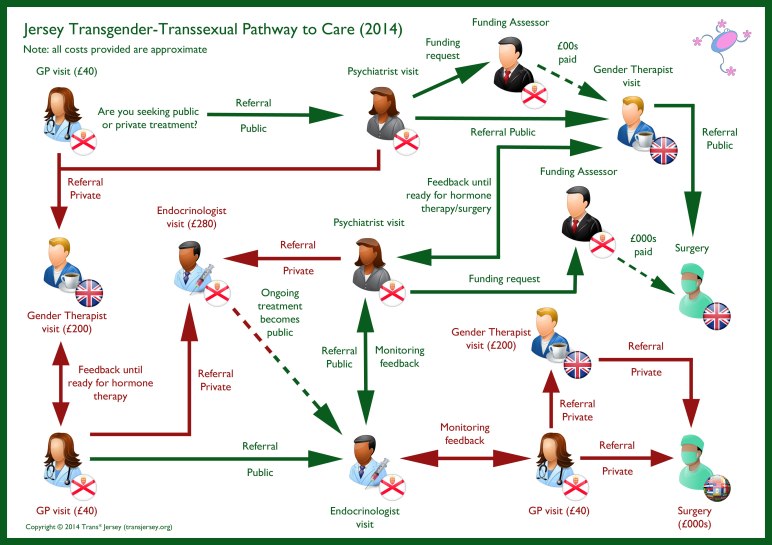
Pathway to Care leaflet

Trans* Jersey has now produced a Pathway to Care leaflet for islanders wishing to transition. The full document can be downloaded here.

The leaflet has been produced in consultation with the various States of Jersey health departments that are used when a person transitions in Jersey.

It is suggested that you download the leaflet, print it and take a copy with you when you go to see your GP.

In due course, Trans* Jersey will be providing all the island’s GPs with a copy of the leaflet.

Doctor

Media links: Questionning the 2014 election candidates

Channel Island equality charity Liberate and affiliate group Trans*Jersey are asking those standing for election to the States of Jersey for their view on LGBTQ issues.

Liberate and Trans* Jersey have emailed all the candidates standing for election to the States of Jersey asking them to complete an online questionnaire about the most pressing issues affecting the island’s LGBTQ community.

The results of the questionnaire will be publicly available on the Liberate and Trans* Jersey websites (www.liberate.gg and transjersey.org). Candidates are asked to complete the questionnaire by 8 October 2014.

Jersey Co-ordinator for Liberate Vic Tanner Davy said:

“2015 is going to be a big year for Jersey’s LGBTQ population with the introduction of anti-discrimination legislation in September and debates on how to introduce marriage for same-sex couples. However, there are other issues that affect the LGBTQ population that have yet to be discussed in the States but are no less important to the approximately 10% of islanders who identify as LGBTQ. It is right that Liberate and Trans* Jersey, organisations that represents the LGBTQ community, ask candidates for their views on these issues, issues that are likely to be put before the States for debate in the next term, the term in which the candidates will serve, if elected.”

voting-paper-ballots

Candidates are being asked the following 10 questions:

  1. Which of the options for same-sex marriage being proposed by the Chief Minister’s consultation document of 20 August 2014 (Equal Marriage and Partnership) would have your support?
  2. Would you support the opening up of civil partnerships to opposite-sex couples?
  3. Which of the options for equalising adultery as a cause for dissolving a marriage being proposed by the Chief Minister’s consultation document of 20 August 2014 (Equal Marriage and Partnership) would have your support?
  4. Apart from religious organisations that are exempt, are there any other businesses or service providers that would have your support to have the right, in certain circumstances, to discriminate on the grounds of sexual orientation?
  5. Apart from religious organisations that are exempt, are there any other businesses or service providers that would have your support to have the right, in certain circumstances, to discriminate on the grounds of gender reassignment?
  6. Would you support the introduction of the use of the internationally recognised X marker by the passport office and registry office to denote someone whose gender is self-determined as neither M nor F? (For example, in the case of a child born with an intersex condition or “DSD” whose parents did not wish to register their child’s gender as M or F until later in life.)
  7. Would you support the removal of the restrictions on adoption by same-sex couples? At present, same-sex couples cannot apply to adopt jointly. However, one partner may submit an application supported by the other. In other words, single parents may adopt but same-sex couples in a civil partnership may not.
  8. Would you support compulsory, age-appropriate, LGBTQ-inclusive Sex and Relationship Education in all schools?
  9. Would you support the removal of the restrictions on blood donation by homosexual men? At present, homosexual men may not donate blood if they have had sexual contact in the last 12 months. There is no exception for homosexual men in committed monogamous partnerships.
  10. Would you support revising the Gender Recognition (Jersey) Law 2010 to remove the requirement for a gender recognition certificate from an approved jurisdiction to be presented and replace the process with a system by which a transgender individual self-reports their transition to the Royal Court (in much the same way that a change of name by deed poll is self-reported and passed through the Royal Court)?

For candidates standing for election, the questions can be accessed here: Link to candidate survey

To find out more about the candidates who are standing in your parish or district, go to vote.je where a full list of candidates can be found. Election day is 15 October so don’t forget to vote!