Equal Marriage update

Trans* Jersey met with Chief Minister Ian Gorst on 29 July 2014. In attendance were Senator Paul Routier, Ruth Johnson (Assistant Director, Social Policy), Martin Gavet, Ellie Jones and Pippa McCarthie from Liberate, Emma Poulliquen and Sara Garwood from the LGBTQ liaison team of the States of Jersey Police, Vicki Twohig and Mark Capern from the Youth Service, Christian May from change.je, Dr Elena Mora and Toni Roberts from Jersey Community Relations and Montfort Tadier from the Human Rights Group.

Martin Gavet opened the meeting by presenting a video produced by Liberate (below).

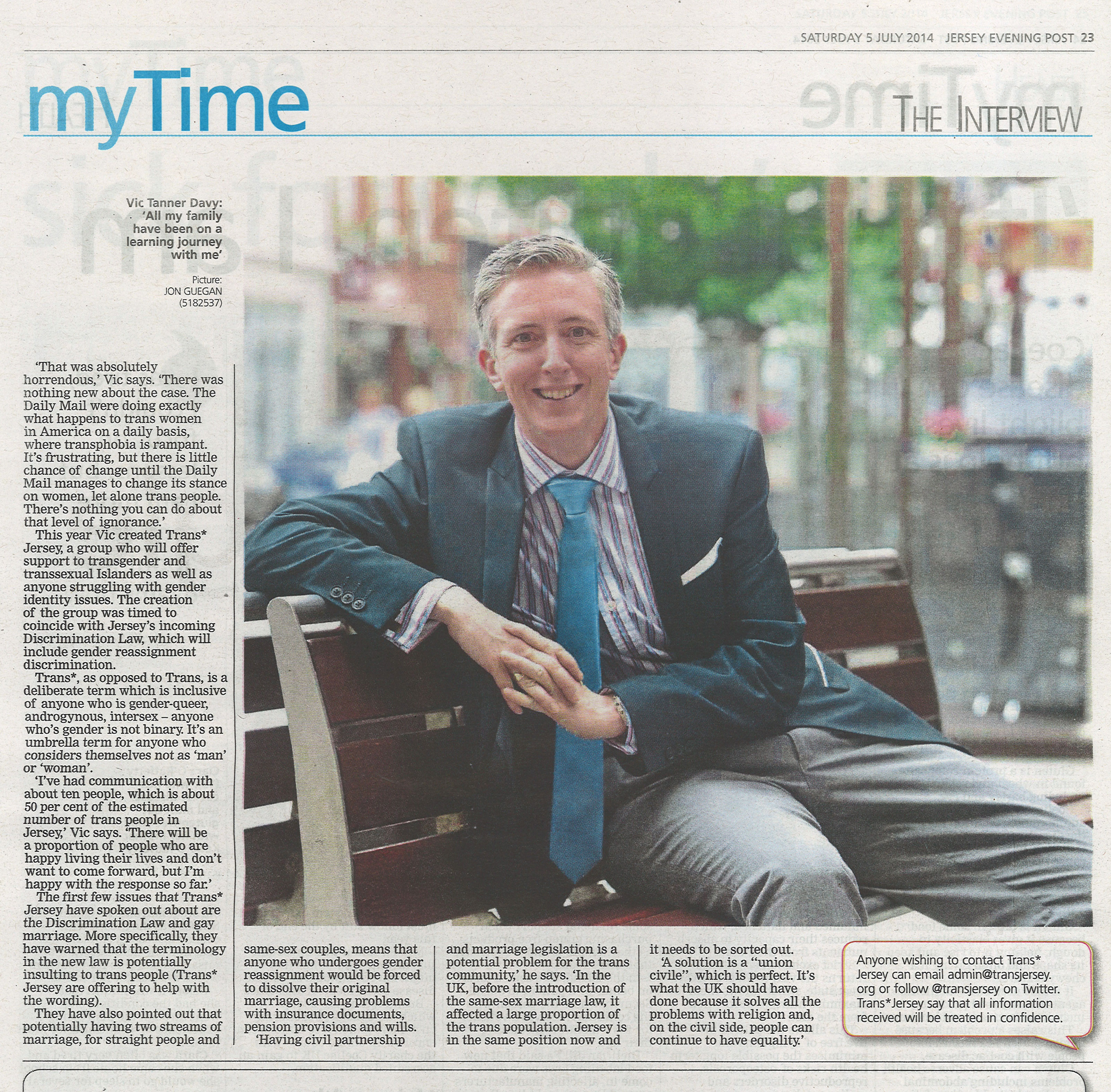
Vic Tanner Davy of Trans* Jersey followed this with a presentation discussing two possible options for same-sex marriage that would provide LGBT islanders with equality. You can download the Powerpoint presentation here.

The presentation started by asking the question, “they’ve got Civil Partnerships, why do they want marriage?”, which is something that has been heard more than once since the debate started. For the trans community, having a single means for two people to marry is really important as it means that divorce is no longer a requirement when someone transitions within a marriage or civil partnership. Having two “streams” (marriage for heterosexual couples and civil partnerships for homosexual couples) does not work.

The term GRC (gender recognition certificate) was explained to the meeting and its significance for trans people. It was pointed out that the state cannot ask a trans person to choose between their right to be married and their right to their GRC.

The presentation suggested two possible solutions: adopting the Scottish model (the Marriage & Civil Partnership (Scotland) Act 2014) or the Union Civile being proposed by Guernsey’s Chief Minister, Jonathan Le Tocq.

The Scottish same-sex marriage law is an improvement on the England & Wales law because it enables couples who are converting from a civil ceremony to a marriage to have a ceremony (in England & Wales you simply get a conversion certificate); it provides a route for gender recognition and converting a civil partnership into a marriage all in one process; it also contains no “spousal veto” clause; and it includes adultery as grounds for divorce (the England & Wales law ignores the possibilities of dissolution by adultery and of non-consummation of a same-sex marriage).

The meeting was informed that this was because the lawmakers could not decide how to define same-sex adultery (or non-consummation) so, rather than change the legal definition of adultery as penetrative sex, they left it out. As both Vic Tanner Davy and Ruth Johnson pointed out, if you can prosecute homosexual rape, you can define what legally constitutes homosexual sex. The meeting was in general agreement that if opposite-sex marriages can be dissolved through adultery or non-consummation so should same-sex marriages because the emotional consequences are just as devastating.

The presentation moved on to look at the proposed Union Civile in more detail. A handout explaining how the law might work and its implications can be downloaded here.

The meeting discussed the implications of the Union Civile for the Anglican church in particular. Both Liberate and Trans* Jersey are sensitive to fact that they would be the religious group most affected by the Union Civile and that its proposal could be seen by some as a first step towards disestablishing the Church of England. Having spoken to church leaders, Liberate and Trans* Jersey know that the Union Civile, although the ideal solution for many, will be a very difficult motion to put through the States.

This is why two solutions were proposed. Although the Scottish model still retains two laws for marriage, it does provide all the non-negotiable elements that we are asking for. The question then becomes, is it wise to pick a battle with the Anglican church, via the Union Civile, that possibly does not need to be had?

Ruth Johnson responded to the presentations and opened the meeting up to further discussion. She informed the meeting that the States are intending to move quickly on this because there is no good reason not to. There will be a public consultation from mid-August to mid-September that will ask the public to comment on a number of options for same-sex marriage. In addition to the two options favoured by Trans* Jersey and Liberate, there will be one that allows for two marriage “streams”, but this time divided between civil marriage and religious marriage, and one that offers civil partnerships to opposite-sex couples as well as marriages to same-sex couples.

The States are endeavouring to encompass a number of matrimonial loose ends in the consultation process, not just same-sex marriage. They also want to know whether opposite-sex couples would like civil partnerships and whether humanists and non-religious groups would like to carry out marriages.

The meeting discussed a number of issues arising from the presentation and from Ruth’s outline. There was no suggestion from those at the meeting that what the States of Jersey are proposing to publicly consult on is in any way inappropriate, although a copy of the consultation document was not available and would not be available until after the Chief Minister had met with religious leaders on 1 August 2014. It was felt by all that Ruth Johnson, in particular, had done an impressive job of understanding the issues and researching the various marriage laws to come up with a number of options.

Following the public consultation, it is anticipated that the Chief Minister will bring a report before the States at the end of September/beginning of October. Liberate and Trans* Jersey both expressed the hope that an educational presentation to States members would be possible as part of the process of bringing draft legislation before the States Chamber in order that the issues for LGBT people could be explained to members and they would have a chance to ask questions. The Chief Minister confirmed that was part of the plan.

The meeting was friendly and open with those present feeling very encouraged by what the States of Jersey are proposing to do regarding enabling every islander to have equality when it comes to marriage.

Discrimination Law update

Trans* Jersey met with Senator Francis Le Gresley on 29 July 2014. In attendance were Martin Gavet (Liberate), Ellie Jones (Liberate), Pippa McCarthie (Liberate), Kate Morel (Policy Principal, Social Security Dept) and Darren Newman (Legal Consultant).

Vic Tanner Davy presented Trans* Jersey’s response to the consultation document. You can download the Powerpoint presentation here.

The presentation started by discussing the differences between sex and gender. The consultation document uses the word “sex” when it is often referring to gender. It was felt that it would be helpful to unpack the differences in order to better understand the non-binary nature of both features for trans* people and intersex people.

The use of the “X” maker on passports and birth certificates was touched on. Trans* Jersey would like to see this option being used in Jersey but, at the moment, although it is internationally recognised and legal in the UK, it is not policy to allow people to elect to have it on their documents.

The meeting acknowledged that there are more than two genders and, because of that, some explanation and guidance on the spectrum of gender would be required to assist organisations like the Jersey Tribunal and the Jersey Advisory and Conciliation Service in their decision making. The gender grid was put forward by Trans* Jersey as one way to define multiple genders.

Trans* Jersey went on to bust three myths about trans people that had, without malice, crept into the consultation document by implication:

  • That trans people’s medical and surgical histories are other people’s business, and that surgery is a requirement to be “really” trans;
  • That transition has an easily definable start and end, and that it will be the same journey for every trans person;
  • That trans* people cannot be trusted to use facilities marked for use by the gender they present as.

bathroom signThe meeting was hugely sympathetic to this last point and understood the need to ensure that the law does not accidentally enshrine discrimination around this point. It was felt that, when the draft law is debated in the States of Jersey, this point will be the one that takes up most time and causes most concern. The meeting agreed that educating the public and politicians to allay fears around this point would be helpful. The Minister and his team said that they would welcome any help Trans* Jersey and Liberate could provide in this regard.

The meeting discussed how trans people should be treated with regard to exemptions under the law for gender-specific employment and sports teams. Trans* Jersey suggested that, for those employers, such as a women’s refuge, who are exempt from discriminating when hiring, transmen should not expect to be able to be employed but that transwomen should be considered for the job along with natal born women.

Trans* Jersey explained that sports teams were still a difficult area for trans people, even at the professional level, as transwomen in particular were seen to have an unfair advantage over natal born women. In fact, research has shown this is not true. Once a transwoman starts hormone therapy, she looses the muscle bulk and testosterone advantage that she had.

In essence, for all purposes, the moment that someone self-reports as transgender they should be treated as the gender they present as – even if they are worse off. The meeting then asked about pension entitlement for trans people and Trans* Jersey said that the same rule applies. For transmen, that might mean working an extra 5 years before they are eligible for their pension.

Trans* Jersey, finally, suggested some wording, based on the UK’s Equality Act, for how the new law might be drafted.

Liberate stated their support for the consultation’s proposals on sexual orientation and asked for confirmation that maternity/paternity leave applies equally to same-sex couples as to opposite-sex couples. The Minister confirmed that same-sex couples are equally covered by the law.

The draft legislation is expected to be publicly available in February 2015.

Media links: Meeting with the Chief Minister

Jersey Evening Post: Tuesday 29 July 2014:
072914Channel Island equality charity Liberate will be meeting two senior Jersey politicians tomorrow, Tuesday 29 July 2014, with affiliate group Trans*Jersey.

The first meeting will be held with Social Security Minister, Senator Francis Le Gresley, over Jersey’s new Discrimination Law and provisions relating to sexual orientation and gender reassignment.

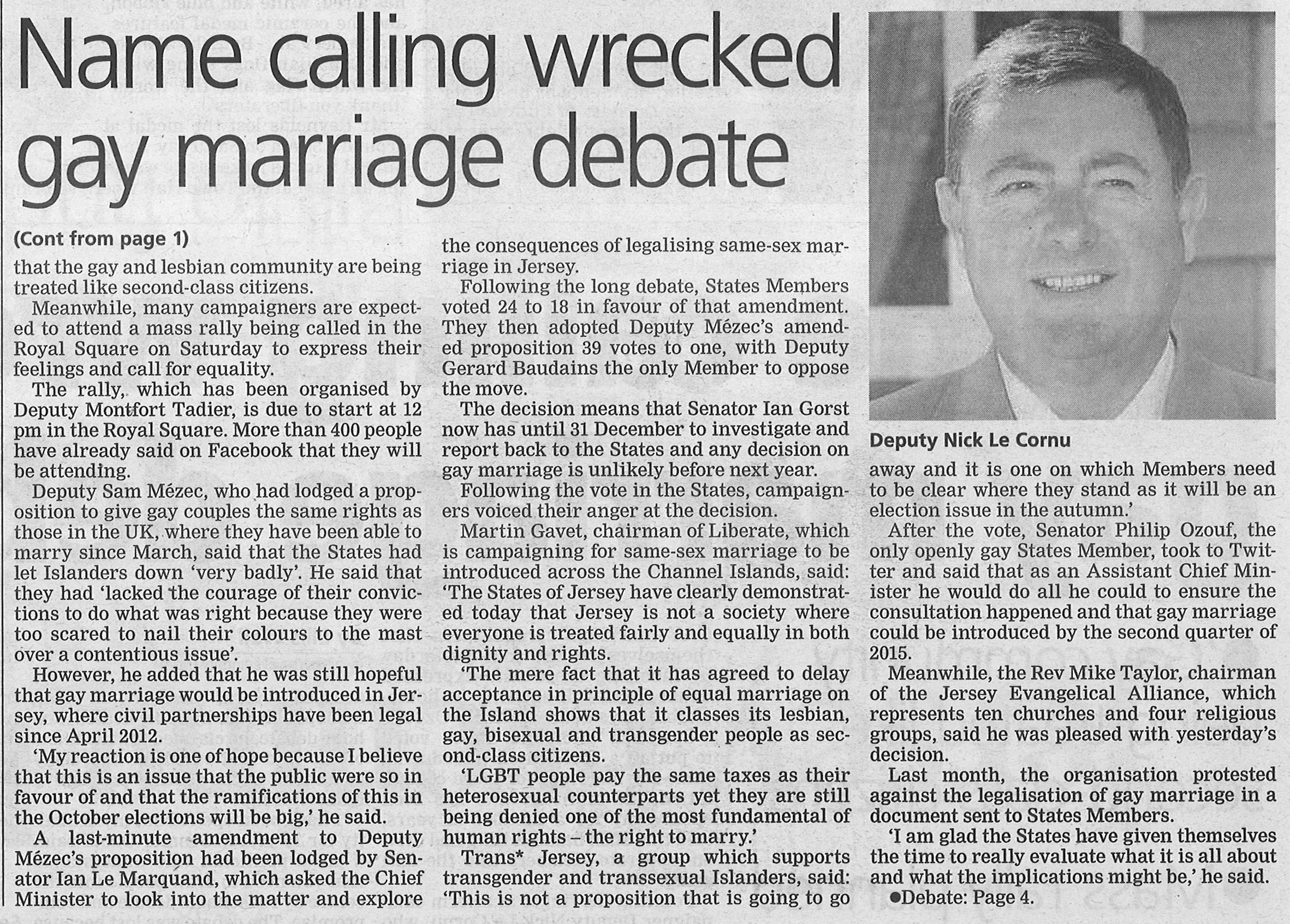
The second meeting with Jersey’s Chief Minister, Senator Ian Gorst, follows the recent debate when the States of Jersey Assembly voted 24 to 18 in favour of a proposition by Home Minister Ian Le Marquand to delay an in principle decision on equal marriage in Jersey. Instead the Assembly agreed to a round of public consultation on the subject which will end in December.

The move provoked strong public reaction and anger from islanders, who recently voted 81% in favour of equal marriage in a poll carried out by the Jersey Evening Post.

The meeting is part of an initial round of meetings with interested stakeholder groups as part of the public consultation on Equal Marriage.

Chair of Liberate Martin Gavet said:

“We welcome the opportunity to meet with both Senator Francis Le Gresley and Chief Minister Senator Ian Gorst, on these important matters.

“For far too long Lesbian, Gay, Bisexual, Transgender and Questioning people in all our Channel Islands have been treated as second class citizens and we see these meetings as a sign that Jersey is committed to ensuring that it becomes a fair and equal society.

“These are issues that transcend politics. Politics has a vital role to play in protecting the rights and freedoms of citizens. Legislation will help to enshrine those values of a caring and compassionate society. Values that acknowledge that everyone is born free and equal in both dignity and rights.

“It will define how we as individuals are expected to treat each other, no matter what someone’s gender is, their gender identity, their sexual orientation, race, disability or belief. Discrimination breeds intolerance and hatred. We hope that soon there will be no hiding place for such attitudes which only serve to divide families, damage the fabric of our society and destroy lives.”

Liberate-Chief-Min
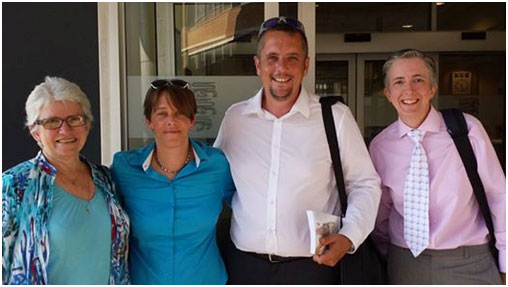
Above (left to right): Pippa McCathie, Support Director (Liberate); Ellie Jones, Vice-Chair (Liberate); Martin Gavet, Chair (Liberate) and Vic Tanner Davy founder of Trans*Jersey, standing outside Jersey’s Cyril Le Marquand House after meeting with Jersey Chief Minister Senator Ian Gorst.

Campaigners for Lesbian, Gay, Bisexual and Transgender rights met with Jersey’s Chief Minister Ian Gorst yesterday over proposals to introduce same-sex marriage.

Liberate, a Guernsey-based registered charity which represents the Channel Islands LGBTQ community described the meeting as constructive, well-researched and informed.

Liberate gave a video presentation to the meeting, which included representatives from other groups working with Jersey’s LGBTQ community, including Trans*Jersey which also gave a presentation.

During the recent States of Jersey debate on a proposition on Equal Marriage there had been considerable discussion around the “unintended consequences” of introducing equal marriage.

“Our video obviously struck a chord with those present at the meeting, especially Senator Gorst and his colleagues” said Martin Gavet, Chair of Liberate.

“It highlighted the consequences of not introducing equal marriage, and continuing to allow discriminatory laws and policies in Jersey society. It had a clear message that discriminatory laws and practices damage the very fabric of our society and family life. Such laws and practices, effectively say to citizens that prejudice, intolerance and hate towards others is acceptable.

“What society needs to wake up to is that this has a hugely damaging effect especially in respect of areas such as mental health and wellbeing. LGBTQ people are known to be twice at risk of anxiety, depression, substance misuse, self harm and suicide. Gay teens have recently been shown to be 6-9 times more likely to attempt to take their own life. Why? Because of the feelings of isolation, bullying, harassment, etc.

“This costs us in terms of emergency, acute, mental health care, policing, education and the welfare state. However this is just the financial cost to society. The tragedy is that families have disowned their own children just for being LGBTQ, and lives have been lost and will continue to be lost in our islands due to such prejudice.

“So long as we have laws that discriminate, we will find it harder to challenge prejudice as not all of us will be treated fairly and equally in dignity and rights.

“Above all this is about allowing two people who love each other the right to show that ultimate commitment – giving them the right to marry. The fact that we as a community have had to fight so hard for this right clearly shows to our decision makers how much we value and respect the institution of marriage”.

The meeting discussed models of equal marriage and civil unions in other jurisdictions including, England and Wales, Scotland, and South Africa. It is the first of several meetings and it is anticipated that the public consultation process may finish before Jersey’s elections in October.

Earlier in the day Liberate and Trans*Jersey also met with Senator Le Gresley, Social Security Minister over the introduction of the Discrimination Law and the inclusion of provisions relating to sexual orientation and gender identity.

A week of contradictions

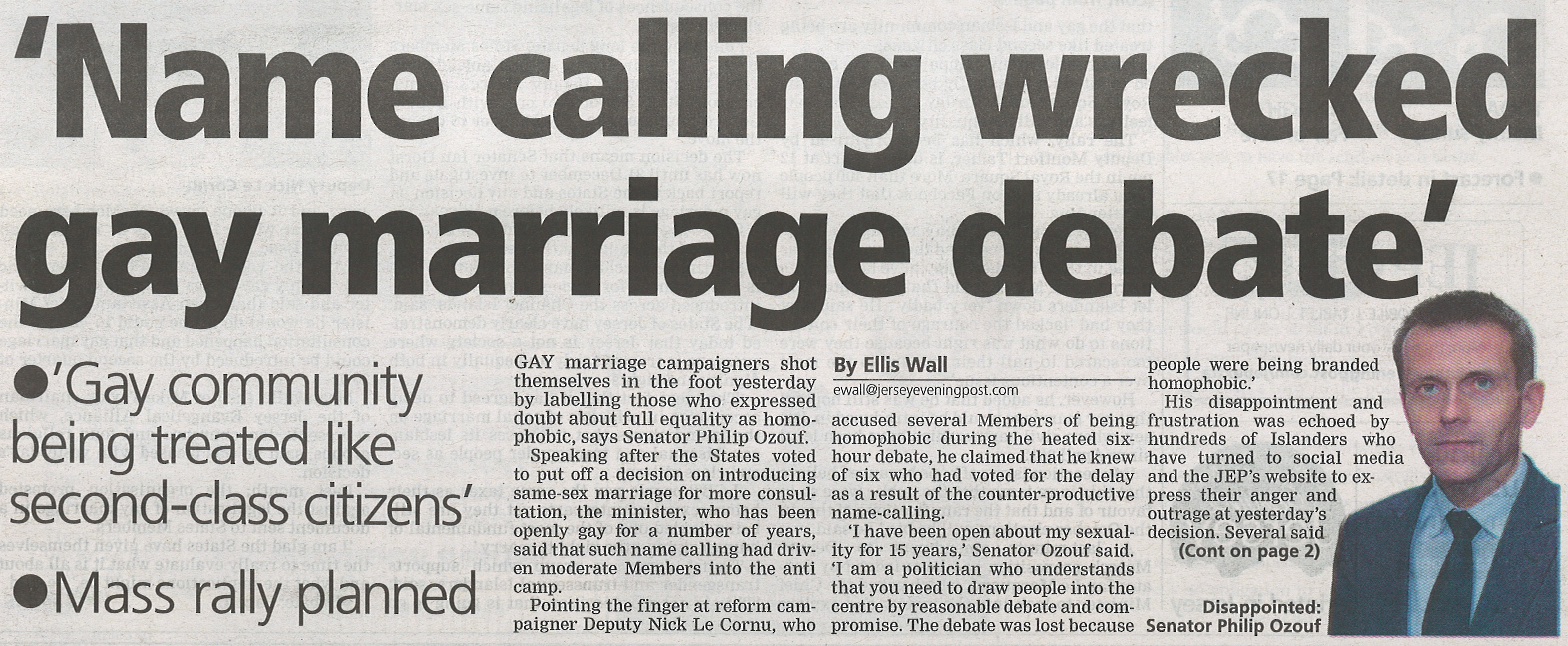
On Tuesday 8 July 2014, the States of Jersey approved an amendment by Senator Ian le Marquand to the proposition to allow same-sex marriage that had been brought by Deputy Sam Mezec. The amendment effectively stalled the progress towards equal marriage in Jersey by making it subject to a consultation by the Chief Minister, Senator Ian Gorst. Apparently, many of those who voted for the amendment did so because of the immoderate language being used by supporters of the original bill. The words “homophobia” and “homophobic” were used on more than one occasion to describe others with opposing views.

On the very same day, Trans* Jersey received two emails from trans* islanders, independently, reporting that they had been the victims of abuse and assault. In both cases, they were physically at risk of injury. In both cases, the attacks were simply because the victims were trans*. As you can imagine, Tuesday was not a good day for Trans* Jersey.

However, the two reports put the States’ debate into perspective and meant that we did not vent our disappointment over the States’ decision by calling-out politicians on Facebook or Twitter as some did. Apart from acknowledging that there might have been any number of reasons why a States’ member voted against same-sex marriage, such as feeling ill-prepared for the debate, there is another reason why we should be moderate in our response to setbacks in the struggle for equal marriage.

Nobody in the States’ chamber on Tuesday was homophobic. Those who have been the victims of homophobia, transphobia or biphobia know it when they see it. *Phobia isn’t an off-colour joke or a misuse of a pronoun or a disagreement over equal marriage. It is a deep-seated hatred of LGBT people that makes a person capable of acts of verbal or physical cruelty to the target of his or her hate. Until you have been the victim of a hate crime, you cannot know *phobia. There is something in the eyes, something in the tone of voice, that LGBT people recognise as *phobic. It’s when the adrenalin starts pumping and the body goes into fight or flight mode.

When a white, heterosexual, male calls people who don’t share his political view on same-sex marriage “homophobic”, he needs to be very careful. Overuse and misuse of any word can remove its power. Homophobia, transphobia and biphobia are important words to the LGBT community for they are they only way we have of describing the most heinous of crimes against us. These words must not be cheapened by those who are unlikely ever to be the target of a homophobic, transphobic or biphobic attack.

Trans* Jersey would like to say to our allies: thank you for your support, thank you for fighting for equality for us, thank you for being allies, but please be careful of the language that you use when you speak on our behalf.

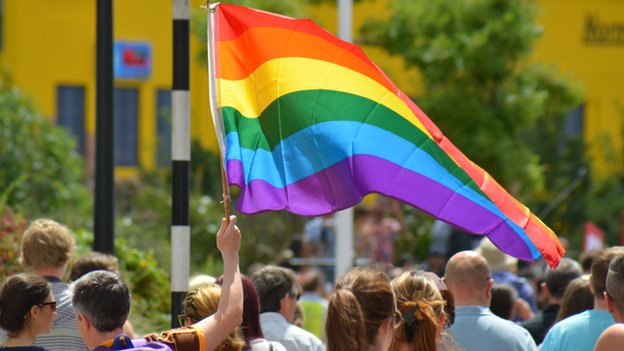
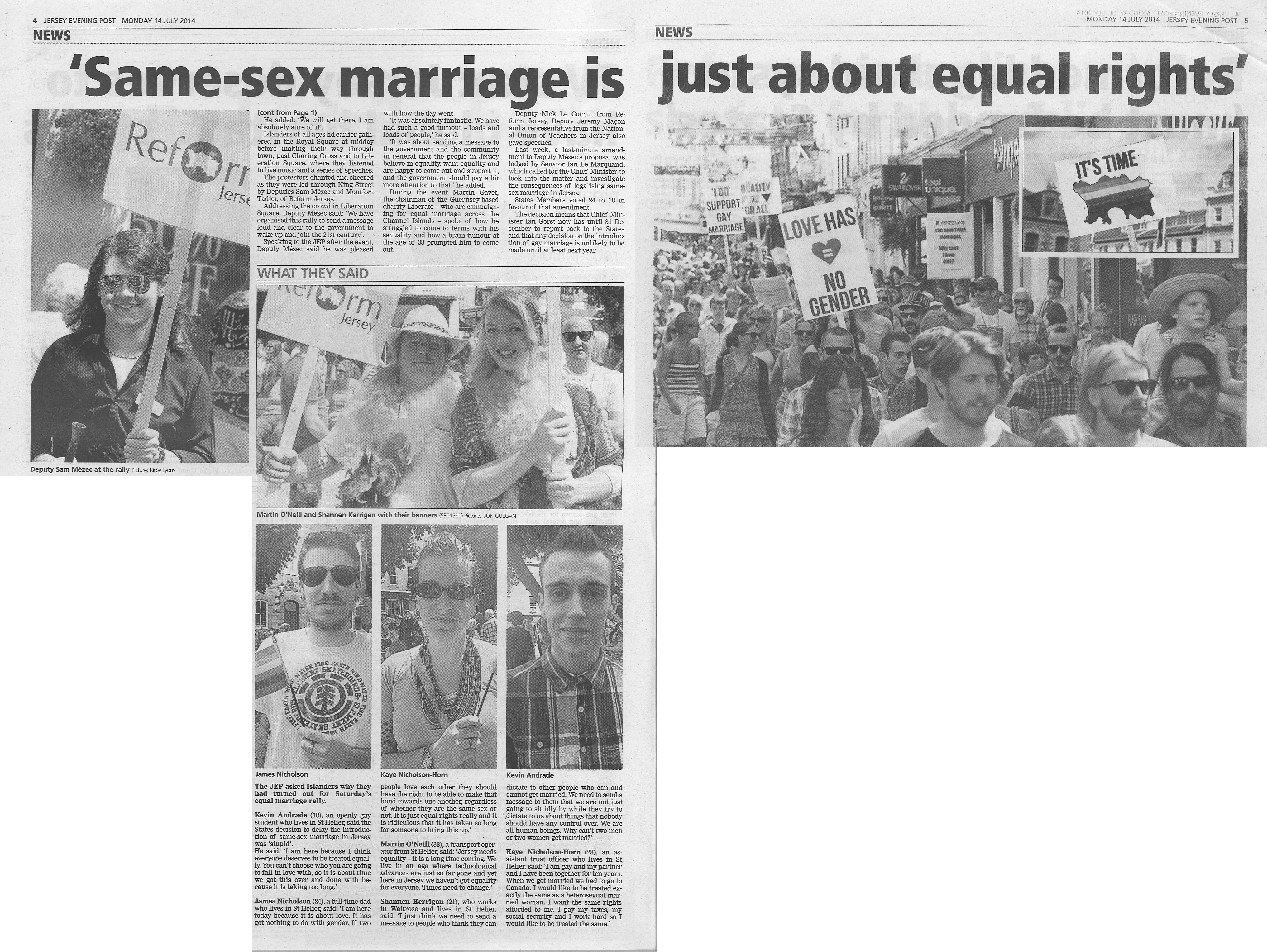
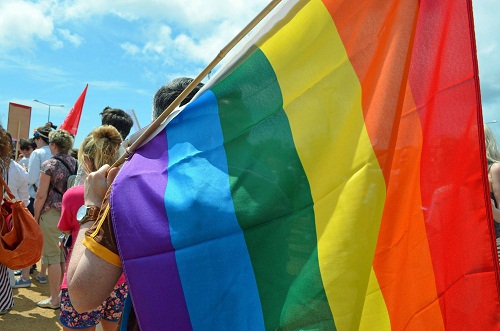
rallykingstreetAnd then, on Saturday 12 July 2014, this happened. Estimates of the number of people who turned out vary but there were certainly hundreds, possibly 1,000 people there. King Street was filled with love, pride and lots of rainbows for what was Jersey’s first ever LGBTQ rights march or equality rally or pride parade. In the end, nobody was sure what it was and, actually, it didn’t seem to matter. We were there to show that we exist. Every human population has an LGBT community. Visible or forced underground, it is there. Our detractors conveniently forget that fact but, sometimes, we do too and when we do, even an island of 9 miles by 5 miles where “everyone knows everyone”, can seem like a lonely place. Saturday was about reminding ourselves that we aren’t alone, that there are others like us, others who also share our desire for equality.

Rallies often don’t accomplish much but this one felt different. This one felt like a moment of change. Maybe because, during the week, the feelings of anger towards the States for their decision dissipated and were replaced with a feeling of solidarity. Trans* Jersey thanks the organisers of Saturday’s event for being the catalyst that brought us all together in Liberation Square. Every LGBT person in Jersey now knows, for sure, that there is a community here to which they belong and who will stand up for their beliefs in a fair and equal society.

Press release: 8 July 2014

Trans* Jersey is very disappointed by the decision of the States of Jersey to vote in favour of Senator Ian Le Marquand’s amendment to require the Chief Minister consult on any change in the law to allow same-sex marriage in Jersey.

gay-marriage-ukTrans* Jersey’s founder, Vic Tanner Davy, said: “We recognise that, as an issue, this is not a high priority for the majority of States members personally. As a result, it was clear that a number of States members had not done their homework and felt ill-prepared to vote on the matter. This was demonstrated most clearly by those concerned about the ‘unintended consequences’ of allowing equal marriage. Anyone who has studied the issue in detail will know that there are no ‘unintended consequences’ to equal marriage. We know that, once States members have had a chance to do their research over the summer, any concerns they may have will be put to bed and equal marriage will go forward.

“Today was a wake-up call to States members that they need to do their homework and come back to the chamber in full possession of the facts about why the island’s LGBT community needs this legislation. This is not a proposition that is going to go away and it is one on which members need to be clear where they stand as it will be an election issue in the autumn.”

Self defence for trans* people

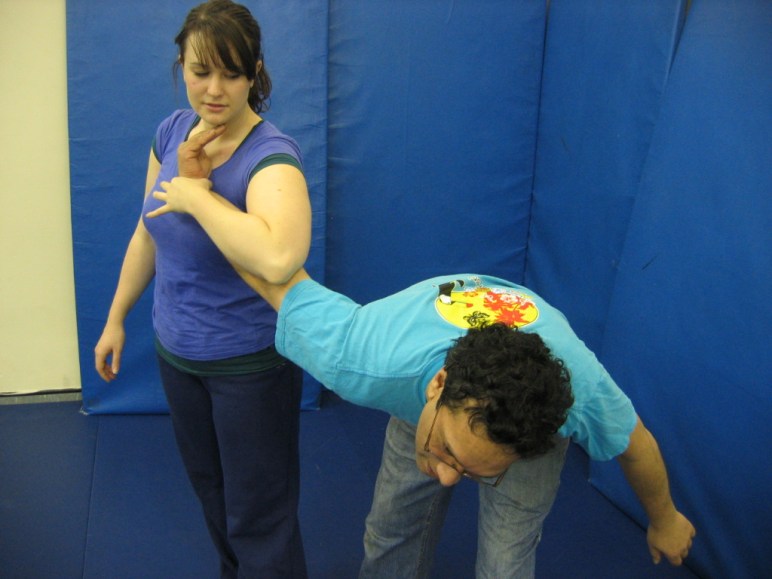
Trans* Jersey invited Roisin Pitman to write a guest blog about staying safe. Roisin was in the States of Jersey police force for over 10 years and is the sensei at Phoenix (Jersey) School for Therapeutic Arts, which specialises in Aikido. She has recently started up Red Zen (Channel Islands) that offers self protection and fitness solutions to women of all shapes, sizes and abilities.

SelfdefenceWhen a trans man or woman makes the decision that they are finally going to live and exist day-to-day in their true gender they are plunged into a world of excitement, fear, worry, uncertainty and self-doubt, all rolled into one.

As a trans woman I was told by a friend at an early stage of my transition that if I acted and went about my business as if I had every right to be a part of society then nobody would care if I was trans or not. There are always early fears and hyper sensitivity as we adapt to living outwardly in the gender that we know we are.

We can take every stare, double take, whispering as you pass, or laughing out loud, to mean that these are all aimed at you, when in fact that is your hyper sensitivity working overtime, which is quite natural. The stare may not have been relevant, the double take might be because they like your dress, the whispering – totally unconnected, and the laughing out load might just have been two people sharing a joke, not at your expense. This hyper sensitivity dies down as we become more comfortable in our ‘skin’.

In a recent conversation with a trans man it was agreed, broadly speaking, that he does not have to deal with some of the worries of a trans female. For example, women have been wearing trousers and masculine clothes for decades; there are many smaller guys out there so a small framed man would not draw too much attention; with testosterone there is often beard growth, an obvious male marker, and voices do drop after a while on hormone therapy.

If you are a trans female with a masculine frame, especially a tall build, with big hands and feet and a low voice it is much easier for you to be ‘read’, regardless of whether you are wearing a summer dress or a trouser suit. Often one’s facial features can give you away and affecting a falsetto voice is a sure giveaway, along with other male markers such as a visible Adam’s apple. Although, to be fair, there are many women with a protruding Adam’s apple, sometimes due to the slightness of frame, or the part of the world that they come from, or sometimes due to an eating disorder, which leaves the neck quite thin and shows all the blemishes and peculiarities. I was married to a woman with a prominent neck bulge and I can assure you that she was born female. I did wonder for a while!

It appears, therefore, that trans females have a lot more work to do to blend in than their male counterparts and sometimes, as we learn to be more female, the characteristics that were normal as a male, come back to haunt us as a female.

We are lucky here in Jersey that random violence is quite rare, although not absent. As a former police man in Jersey I encountered violence on an almost daily basis, but rarely was it a totally random act without warning. With the grace of one’s God or belief system, I survived twelve years on the street with little or no injury. Although, on three occasions, I was attacked with a knife, fortunately surviving without injury, partly due to luck and partly due to my training, not as a police officer but as a martial arts student of Aikido (a Japanese defensive art using the opponent’s body weight and aggression against themselves), without causing undue injury to the soon to be arrested felon.

I have now been studying Aikido for thirty-four years, twenty-seven of them as an instructor. I founded my own school in 1987 and now have Clubs in Jersey, Guernsey, UK, France and Italy. I currently hold the rank of fifth Dan black belt and rank among the top 2% of female Aikido instructors in the British Isles. I have blended my experience as a street police officer with that of a martial arts coach to create a unique insight into self protection and awareness that not only includes physical responses to a myriad of attacks, but blends with it the theoretical side of self protection by way of lecturing on a number of relevant subjects such as:

  • Self defence and the law
  • Decision making in stressful situations
  • How to read body language correctly
  • The aftermath of rape and sexual assault
  • Urban safety for both day and night
  • Travelling abroad in safety
  • Travelling by car and public transport
  • Drugs and their effects

I have attended many ‘self defence’ courses (put on mainly for women) as either an observer or guest instructor, run by numerous martial arts clubs over the last thirty years, and they have all disappointed me in the way that they were approached and delivered. Most martial artists teach their own martial style and dress it up as self defence when, in fact, although on the same spectrum, self defence and martial arts are at opposite ends. It is not just a matter of dressing in civilian clothes and teaching a martial art, it goes much deeper than that, requiring an in-depth knowledge of the human psyche and their behaviour patterns. Awareness is key.

If anyone attends a self defence course where they are told that in six, eight or ten weeks they will be able to deal with a violent altercation then they should run for the hills! There is no guarantee that any human will be able to deal with a violent situation, there are only tools that can be taught to make someone more aware and give them a little more knowledge to assist them. You might be, for example, a very highly ranked martial artist that people would consider infallible in a real situation but one thing alone marks the difference between the training room and real life: the fear factor, or the ‘flight or fight’ syndrome, when the body produces adrenaline in an effort to ready itself for combat. Some can handle the fear factor, many cannot.

Trans* people often feel even more vulnerable, especially in the early days of transition when often, especially male-to-female, they believe that every movement, mannerism and action is being ‘read’ by another person. They think everyone must just ‘know’ who and what they are. This is the hyper sensitivity that I referred to at the beginning.


Trans* Jersey would like to thank Roisin for her contribution to the website and sharing her knowledge. If you would be interested in attending a self protection and awareness course, set of seminars or informal talk with a question and answer session, Roisin runs all sorts of courses to suit your needs. It can be theory only or a mix of physical and theory. If there are enough people (at least four with no upper limit), Roisin can arrange for a special Trans* Jersey course or, if there is less interest, she can offer you a place on courses she is already running. Please contact Roisin Pitman on roisin.pitman@hotmail.co.uk to register your interest in attending a self defence course and the sort of course you would be interested in.